Drywall Texture Matching Colorado Springs: How to Choose
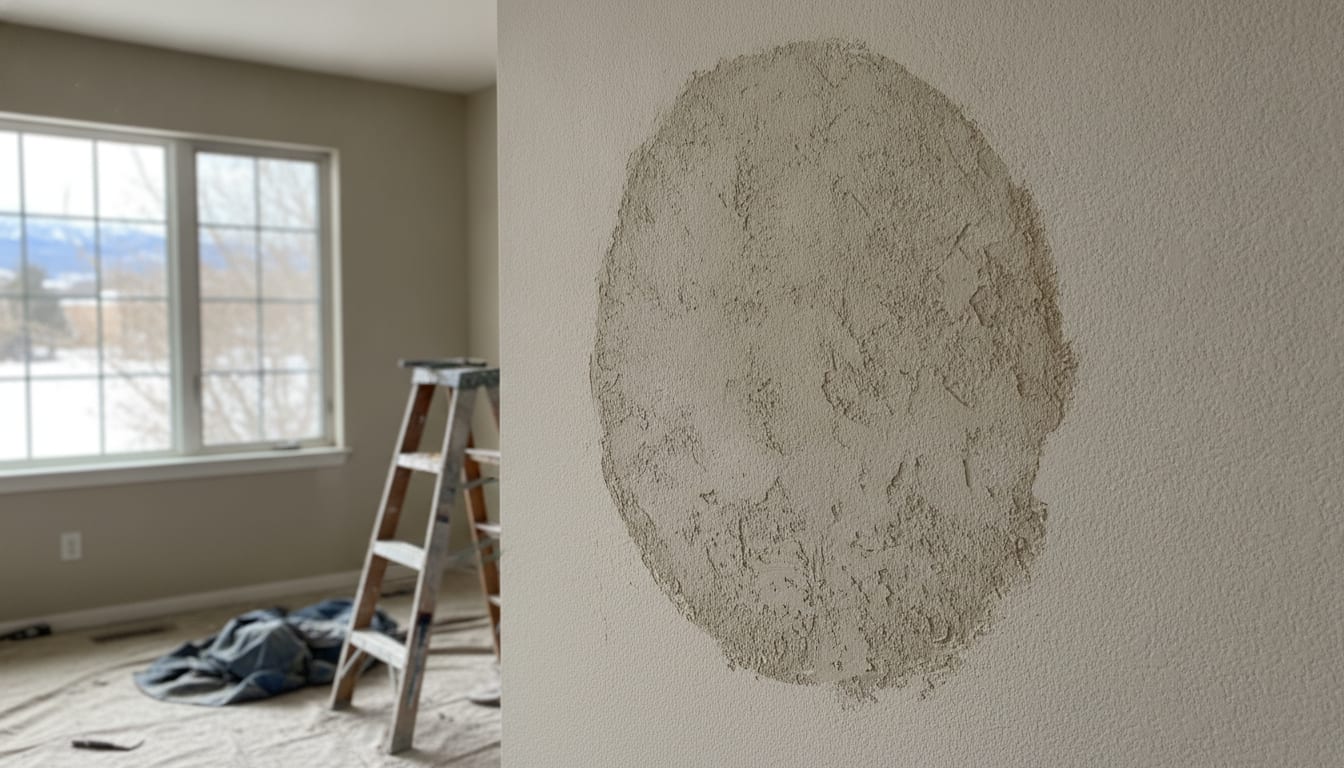
How to choose drywall texture matching services in Colorado Springs, and why knockdown or orange peel repairs disappear when done right.
Winter is prime time for indoor repairs in Colorado Springs. The siding and fences have to wait for warmer weather, but drywall patches, texture matching and interior painting can happen right through the cold months. If you've got a wall or ceiling with a patch that's bugged you all year, this is the season to finally get it fixed.
Why Texture Matching Is Harder Than It Looks
Most homes in Colorado Springs and the surrounding area have one of a handful of wall or ceiling textures: knockdown, orange peel, or an older hand-applied texture. These textures aren't random - they're built up in layers with a specific tool, a specific amount of mud, and a specific drying time before the final pass. A patch that skips any of those steps will dry to a different sheen, a different pattern, or both. Under regular light it might look fine. Turn on a lamp at a low angle in the evening, and suddenly you can see the outline of every repair like a shadow on the wall.
That's the single biggest complaint homeowners have about drywall repairs: not that the hole got fixed, but that the fix is obvious from across the room. Matching texture well means matching the tool, the consistency of the mud, and the technique the original installer used - then priming and painting so the new section absorbs paint the same way as the surrounding wall.
What to Look for When Choosing a Texture Matching Service
Ask how they identify the existing texture before they start
A contractor who's done this a long time will look closely at the pattern - the size of the knockdown splatter, how heavy the orange peel is, whether it's a hand-applied swirl or stomp pattern - before mixing anything. If nobody's checking the existing texture up close, that's a sign the repair might not match once it dries.
Ask what happens before the texture goes on
Good patch work isn't just about the final texture coat. It starts with cutting back any crumbling drywall to solid material, taping and mudding properly, and letting each layer dry before sanding. Skipping steps to save time is usually what causes a patch to telegraph through the paint later. If a crack keeps coming back in the same spot even after it's been patched, that's often a sign of movement in the house rather than a drywall problem - worth mentioning to your contractor at the estimate so they can take a look.
Ask how they protect the rest of the room
Texture work is messy - overspray and dust travel. A crew that's careful will cover floors, seal off doorways, and protect furniture before anything gets mixed. Customers who've worked with Brush Masters often mention that the crew spent more time prepping and protecting the room than actually applying texture and paint. That ratio is usually a good sign.
Ask how the repair gets primed and finished
Unprimed patches absorb paint differently than the surrounding wall, which is exactly what creates that dull or shiny