Knockdown Texture Repair: Is That Winter Crack Serious?
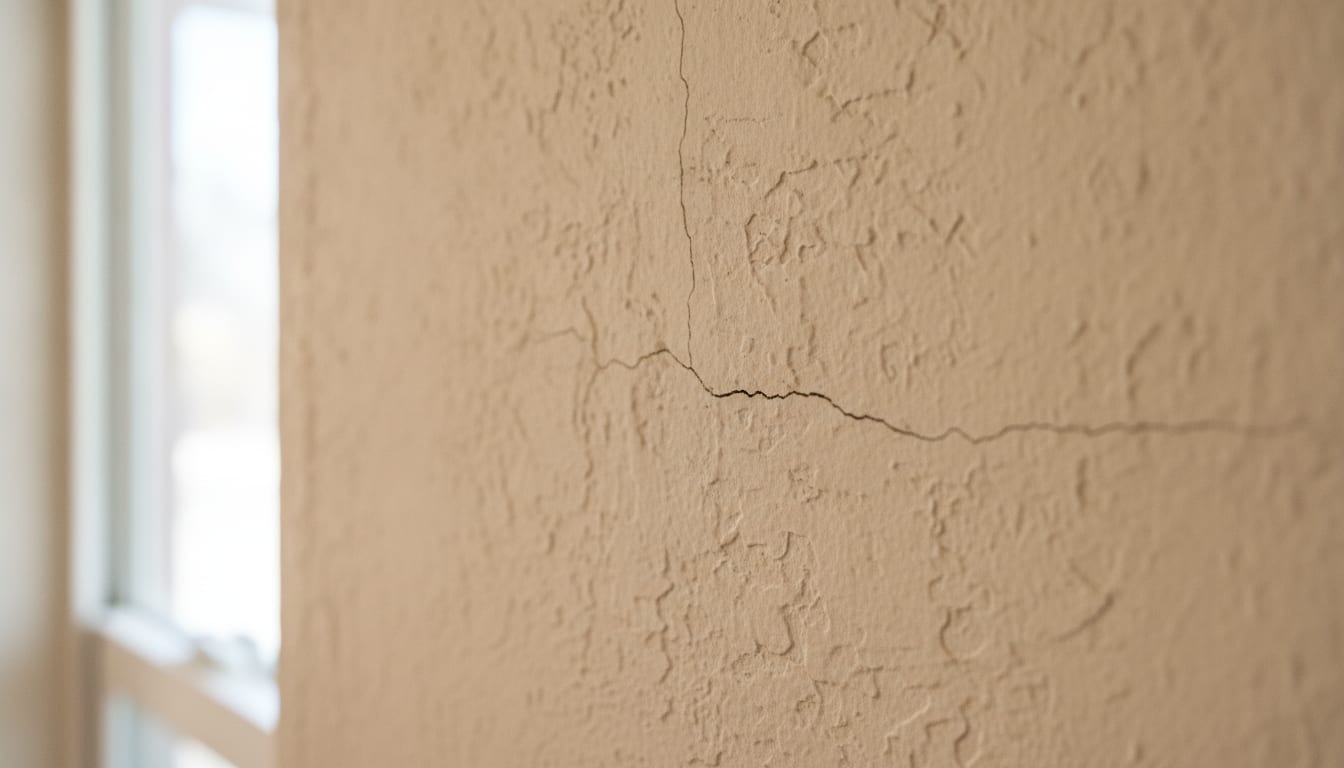
Cracks showing up on dry winter walls in Colorado Springs? Learn which ones need a simple knockdown texture repair and which point to movement.
Every winter, furnaces fire up across Colorado Springs and the dry heated air inside a home pulls moisture out of everything it touches - including drywall and the texture on top of it. That's when homeowners start noticing hairline cracks near door frames, over windows, and along ceiling seams that weren't there in August. Most of the time it's nothing serious. Sometimes it's a sign of something worth watching. Here's how to tell the difference, and what Dave looks for when he's out doing a free estimate.
Why Winter Brings Cracks Out of Hiding
Drywall and joint compound both shrink slightly as they dry out. In a home at 6,000-plus feet with the furnace running for months, indoor humidity can drop well below where it sat in summer. That shrinkage is enough to open up a fine line along a seam, a nail pop, or a corner bead that was already a little weak. These cracks tend to be thin, straight, and follow the drywall seams or the edges of door and window openings - because that's exactly where the board meets a joint or a different material.
If your home has knockdown texture - the mottled, stucco-like pattern common in Colorado Springs builds since the 1990s - these seasonal cracks usually show up first in the texture itself, as tiny fissures across the high points, before the drywall underneath is affected at all.
Simple Patch: What It Usually Looks Like
A crack that's a candidate for a straightforward patch tends to share a few traits:
- It's hairline thin, under about 1/16 inch wide
- It runs along a taped seam, not diagonally across open drywall
- It doesn't reappear in the exact same spot after a prior patch
- Nothing nearby is sticking, sagging, or out of level - doors still close fine, no new gaps at baseboard
For these, the fix is routine knockdown texture repair: clean out the crack, re-tape or fill it, let it dry, then match the surrounding knockdown pattern so the repair blends in rather than standing out as a smooth patch on a textured wall. That matching step is where a lot of DIY patches fall short - the texture needs the right amount of mud, the right drying time before knockdown, and a steady hand with the trowel. Done right, primed and painted, you shouldn't be able to find it again.
When a Crack Is Movement, Not Just Shrinkage
Some cracks come back - same spot, same shape, sometimes a little wider - no matter how many times they're patched. That's usually a sign of structural movement rather than simple seasonal drying. A few things point in that direction:
- The crack is diagonal, especially running from the corner of a door or window toward the ceiling
- It's widening over months or years, not just appearing once
- Doors or windows nearby are sticking or no longer latch properly
- You can see a step or offset where one side of the crack sits slightly higher than the other
- It showed up after a previous patch, in the exact same place
These are worth mentioning at the estimate rather than just painting over again. Soil movement, foundation settling, and framing shifts are common around the region, and a recurring crack is usually the house telling you something is still moving underneath the surface. Brush Masters isn't a structural or foundation contractor, but Dave has seen enough of these over 40-plus years painting around Colorado Springs to know which cracks are cosmetic and which ones deserve a second opinion from a structural professional before any texture repair goes on top.
What to Ask at the Estimate
When Dave comes out, point out every crack you've noticed - even small ones - and mention if any have come back before. He'll look at the pattern, the direction, and what's happening around it, and talk through whether it's a one-time patch-and-match job or something to monitor first. Every estimate includes a breakdown of the time involved, the paint and labor estimate, and a short list of things you can do before the crew arrives so the day goes smoothly - things like clearing furniture from the wall or taking down nearby pictures.
Protecting Your Home During the Repair
Whether it's one small patch or several rooms of texture matching, floors and furniture get covered and protected before any work starts - something customers consistently mention after the fact. The goal is always a repair that disappears completely once it's primed and painted, not a visible patch that stands out every time the light hits the wall differently.
If you're seeing new cracks this winter anywhere from Briargate to Black Forest, Monument to Fountain, Brush Masters offers free in-person estimates to take a look and talk through what's going on.
Frequently Asked Questions
Why do I only notice wall cracks in winter?
Heated indoor air during a Colorado Springs winter pulls moisture out of drywall and texture, causing slight shrinkage along seams and corners. That's usually when hairline cracks that were invisible in summer suddenly show up.
Can you match my existing knockdown texture?
Yes - matching texture so a repair blends into the surrounding wall is a regular part of what Brush Masters does. Dave looks at the pattern on your wall and matches it before priming and painting so the patch disappears.
What if the same crack keeps coming back?
A crack that reopens in the same spot after being patched is usually a sign of ongoing movement rather than simple drying. It's worth pointing out at the estimate so it can be looked at before any texture repair goes over it.